
Soul Eater
Sup, sup? How’s it goin’ -Death
Carolina Reapin'
Soul Eater, you get the honor of being my first review. As a fan of Fire Force, I saw some of the subtle and then not so subtle nods to Atsushi Ohkubo previous work in the anime, and since I couldn’t wait to see what happens next, I went all in on that manga.
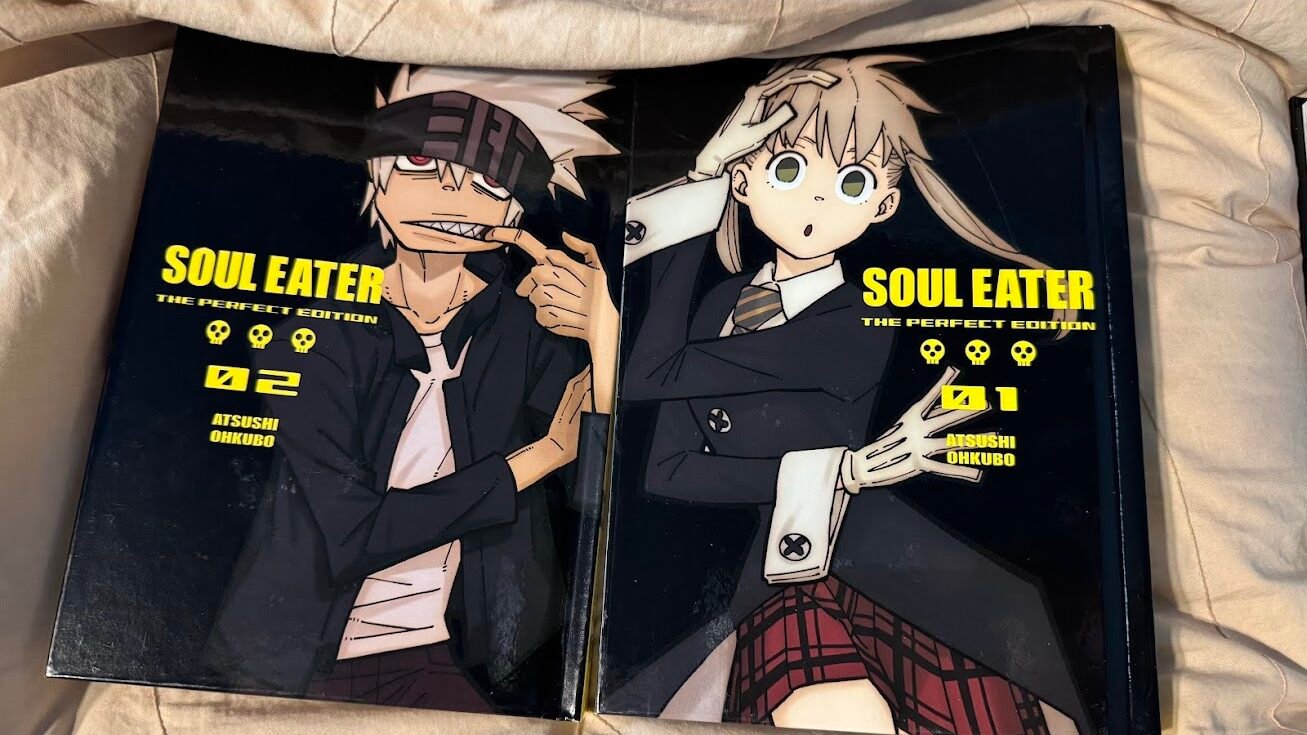
After seeing various Kid, Liz and Patty cosplays to this day, decided to go in on the ‘Perfect’ editions and got it mostly all in one go, the last volume delayed a bit. We have a series that still speaks to the overall fandom, can see its influences in RWBY, My Hero Academia as example.
Characters/Plot
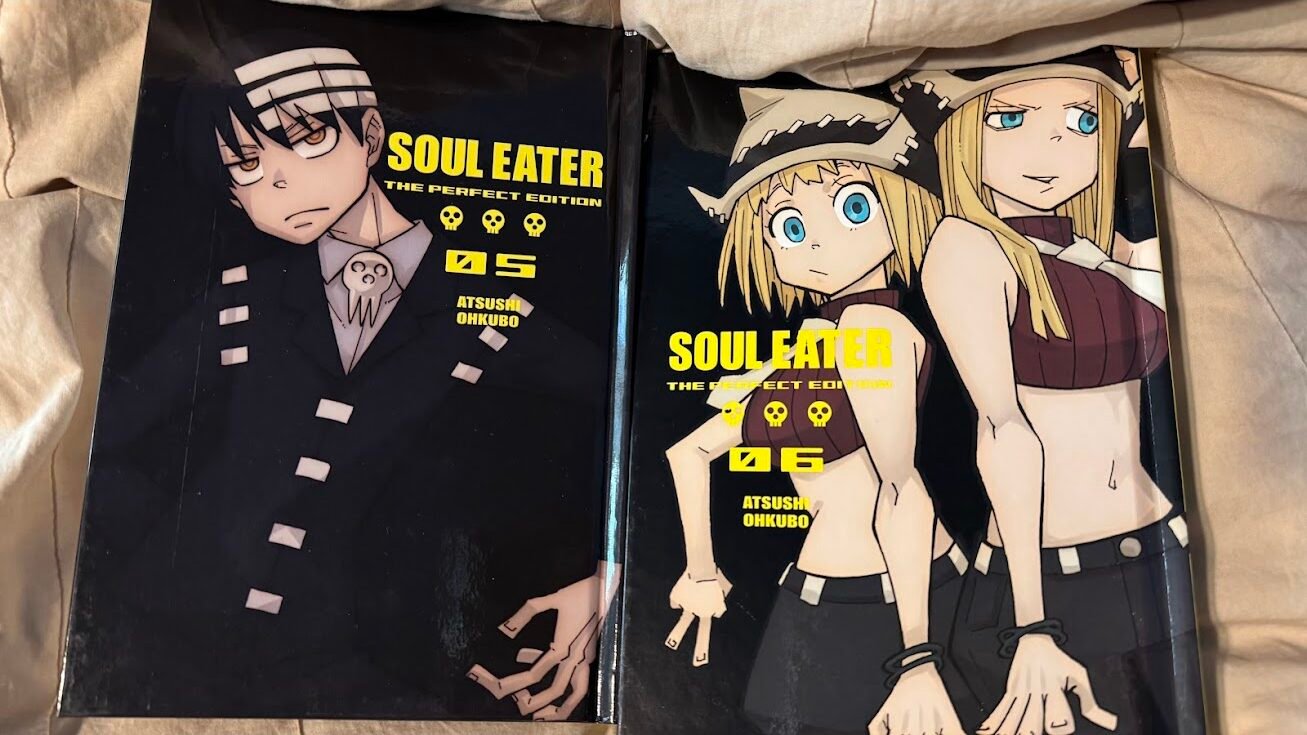
At its core, this is an ensemble cast that rotates between three main protagonists and their humanized weapons, more on that in a bit. We have Maka Albarn, a girl with (rightfully justified) daddy issues with her recently divorced philandering father, and Soul Evans, a weapon that goes between a scythe and human form with his own family issues.
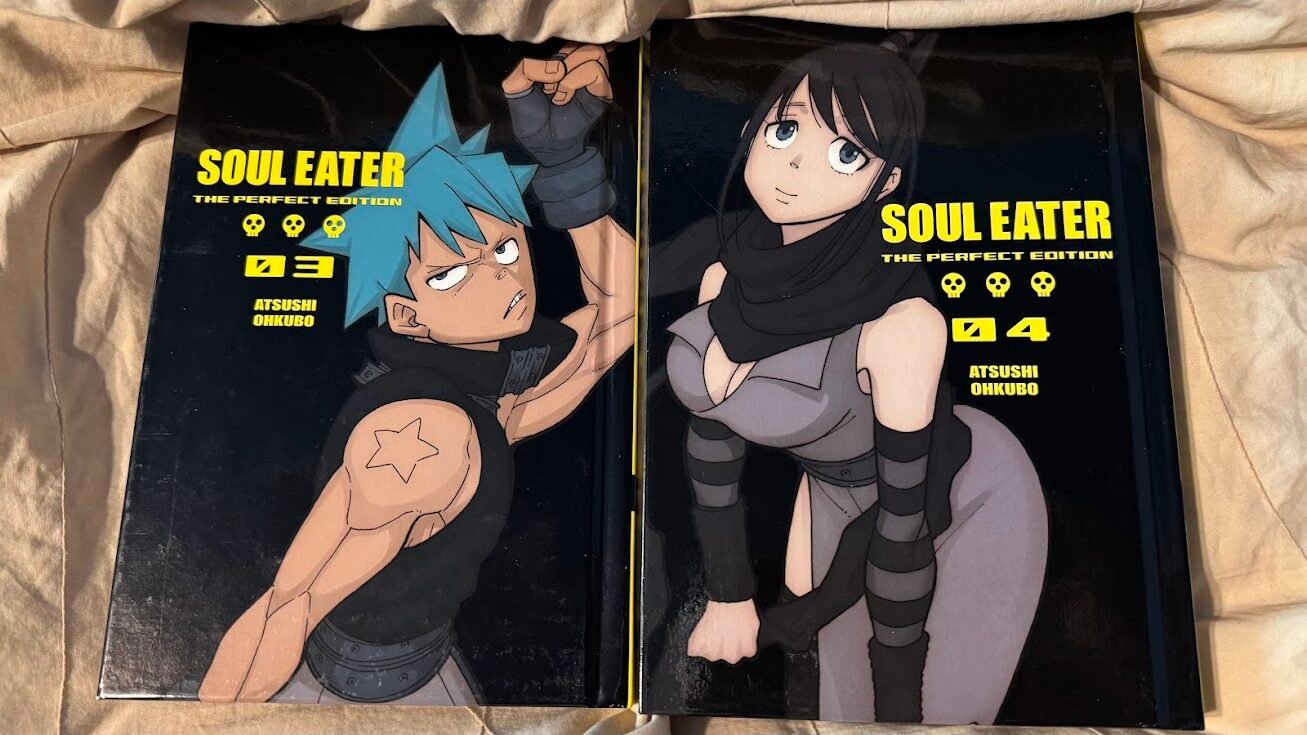
There’s Black Star and his weapon Tsubaki, an orphaned child with great potential and even greater aspirations to ‘transcend the gods’, matched with a woman who complements his bravado with calm vibes.
Then there’s Kid Death, son of Death with task of inheriting his father’s legacy and his two weapons, Liz and Patty, two street-wise sisters from this world’s version of New York.
As for adults, we have Death, the ruler of Death City, who for many would be intimidating for his symbol of being the end, talks in a nonchalant manner.
Maka’s father and weapon to Death Spirit Albarn is someone who likes the ladies. So much, his wife divorced him, leaving him to spend time at a cabaret and (mostly) fruitless attempts to win back his daughter’s affection. Flaws aside, he’s very good at he does; bring swift death and justice to people on Death’s hit list.
There’s the doctor Franken Stein who is on the edge of brilliance and madness, who sees people as experiments for his curiosity. There are other adults at DWMA (Death Weapon Meister Academy) with their own colorful personalities that you should read for yourself.
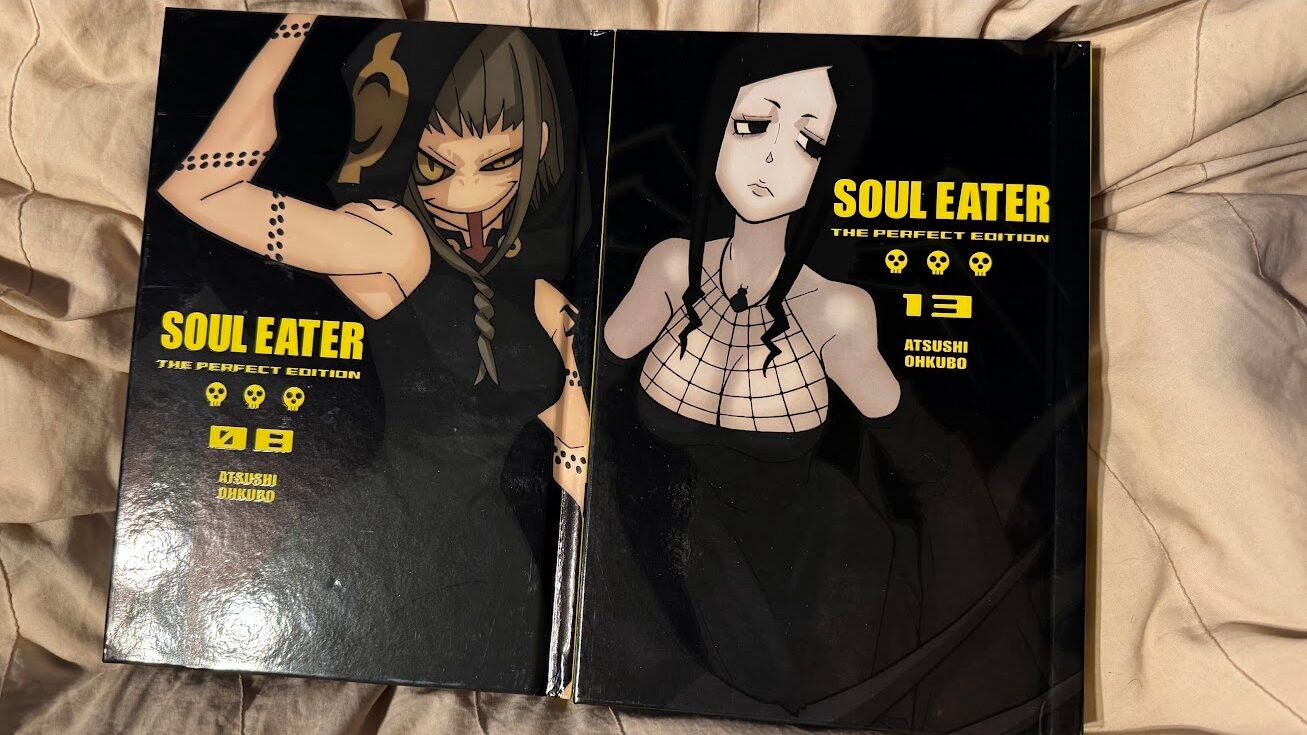
There’s a rotating cast of villains ranging from the witches, who while having some surface of solidarity, is only skin deep as there are various factions vying for power such as Medusa, part of the Gorgon sisters, her older sister Arachne which we’ll meet just at the end of the first third who has her own group. There’s also Asura, the first to rebel against Death with the power of madness, and other factions that switch allegiances for survival purposes. The overall theme for Witches is that are animal themed from snakes to spiders, to wolves, frogs, mice and other villains who are chainsaw themed long before chainsaw man, so its never a dull moment in this department.
Plot
What starts as the goal to collect 99 souls and 1 witch soul for Maka and Soul Evans so that they be considered a weapon for Death to use slowly but surely unravels and…re-ravels(?) into a war against the witches, a subset of those witches who wish to unleash a long buried secret by Death himself and the hilarity and tragedy that happens in between.
Atsushi Ohkubo and his editor have the unenviable task of introducing a wide cast of heroes, villains, and somewhere in between throughout this 17 volume Perfect Edition romp and giving them ample page time. About 1/3 of the way through we’re introduced to other students with their weapons and abilities such as Kilik Rung with two gauntlets named Pot of Fire and Pot of Thunder, Ox Ford and Havar a nearly bald boy by choice save for two points of hair, other Death Scythes from across the world such as Australia, Japan, Africa.
Other colorful villains such as noble guardian who watches over a young witch, Arachne, another witch with her own plot, and so on. They largely succeed in juggling the various arcs and character development, though at times once one faction is defeated by our heroes, but not completely, they sort of disappear and just pop up later.
Art
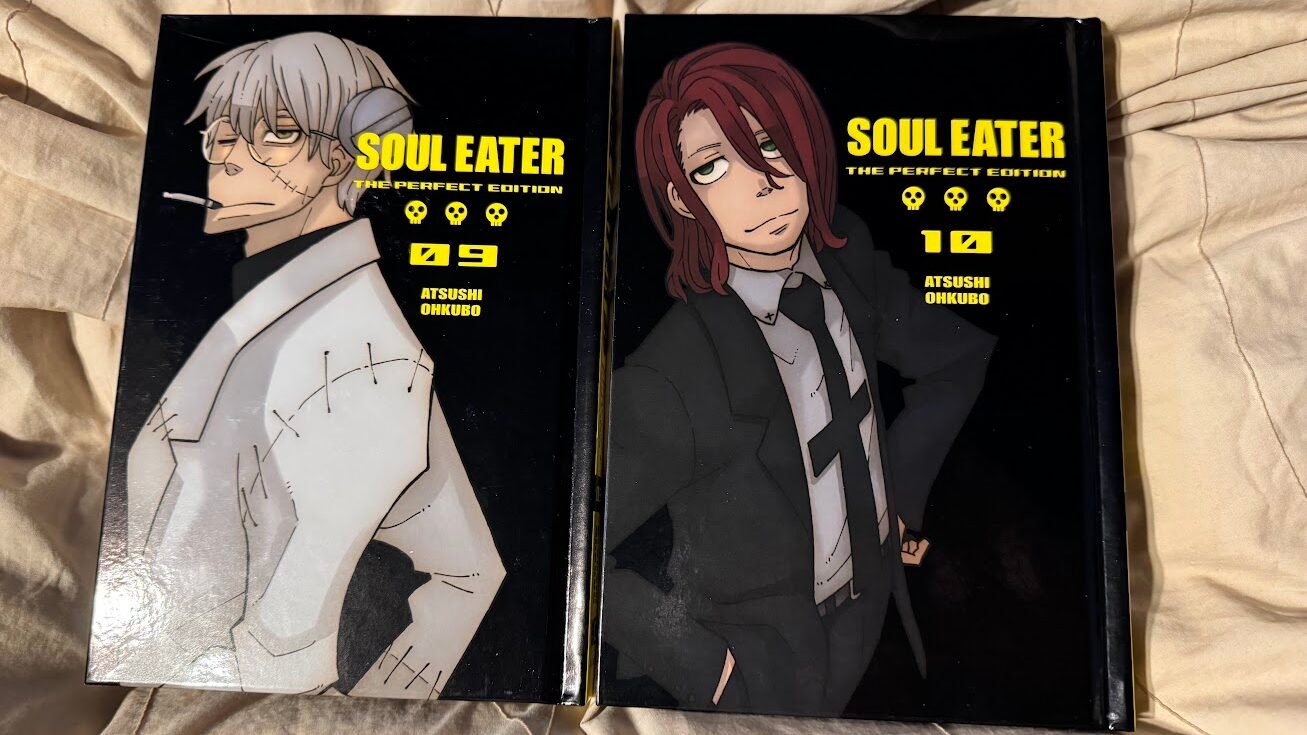
If you’re familiar with the group Gorilliaz, a super group from the early 00s, it takes that art style and blends with what you expect from Japan, though its not afraid at times to change it up during key chapters and moments to convey tone. There’s even a moment where our heroes have to venture inside a book and in sort of a meta-commentary, some of the dialogue is dug deep inside the pages, where the DWMA students calls it out.
Flow
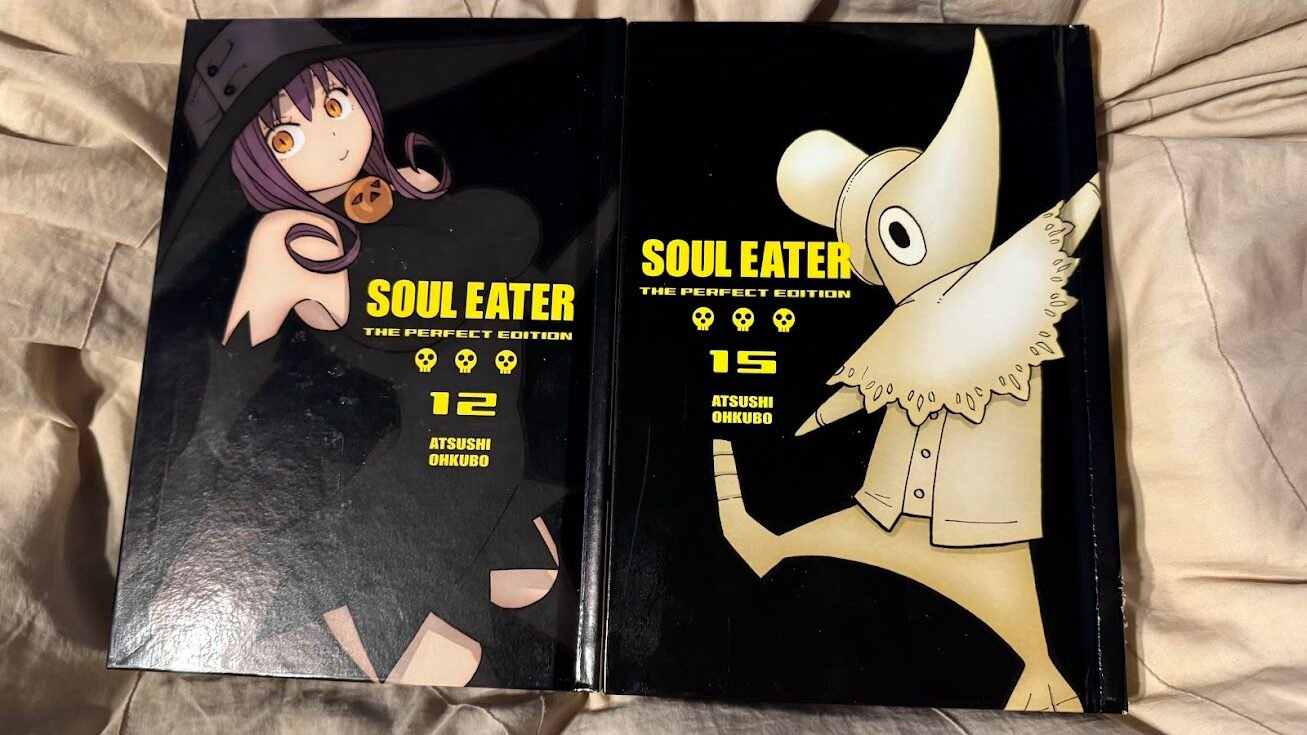
Soul Eater uses its time wisely and is for the most part, wisely paced. It knows when to move along, when to pause after a major arc for your heroes and civilians to breath, reflect, or just have a fun moment or two before the next one. At the end, it feels a bit rushed, revealing key secrets with no hints or clues leading up to it; too late, we have to get these action scenes in, then a nice, long epilogue!
Themes/Motifs
One of the themes that does a sec to pop up but eventually makes its presence known is handing over (or punting if you want to be cynical) power and responsibility to the next generation. Whether its Death to Kid, Spirit with Maka, the teachers at DWMA to their students, there’s some initial worry if the kids are going to be alright, as they have their own issues to sort out, which comes to confront them no matter how they attempt to run or delay it. I won’t spoil it too much, but I’ll say the theme of madness taking over, how not letting absolute power take you over you is another, in one of the later chapters, quite literally.
Soul Eater does a good job showing, and occasionally telling you when needed its themes, at times personified as to give our heroes a sense of accomplishment when its defeated or controlled. A quarter of the way through, Soul Evans for example will have an ogre in his mind to tempt him to use the power of madness so he can overtake, the story does a fantastic job of him first outright denying this power, to using it brashly to save himself, Maka and his allies, to using it creative ways towards the end.
Overall
As I started at the beginning, I can see why its still cosplayed at conventions to this day, its strong cast of characters, its sharp, bold art style, and pacing with the plot has stood the test of time.
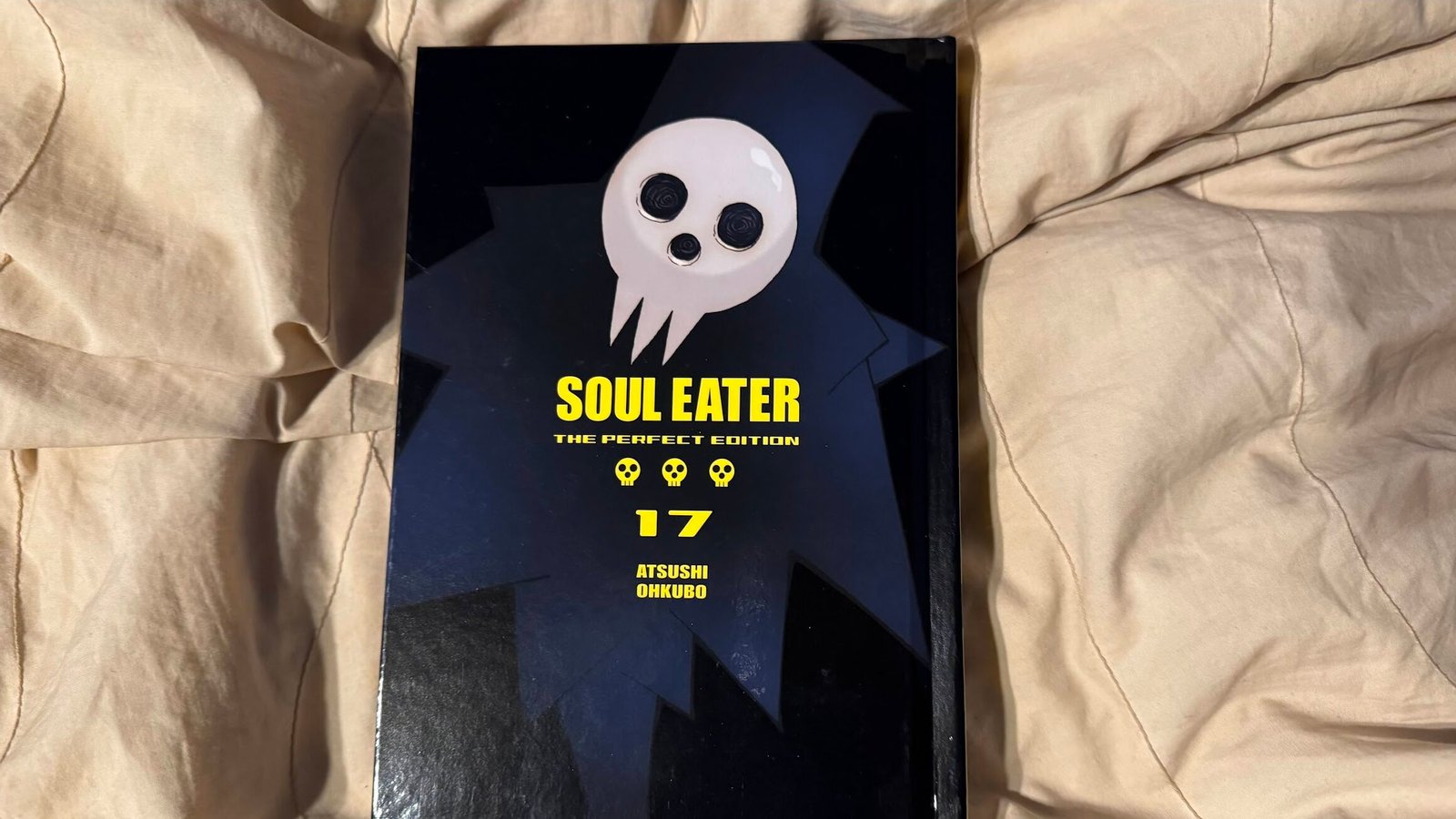
The ‘Perfect’ Edition while a sturdy number, does not have the author’s afterward that’s present in the softcover or other works such as Fire Force, or translation notes for various lines and saying, so take that into consideration.
Its 17 volumes, averaging 1.5 volumes compared to the softcover, so it will take up less space on your shelf. It comes recommended no matter how you read it.