Legend of Zelda 40th Anniversary:The Legend of Zelda (NES)
Just what is the secret they keep talking about?
Playing with Power!!
Publisher: Nintendo
Developer: Nintendo R&D4
Platforms: A lot. Most current, easiest to access is on Nintendo Switch Online.
If you’ve been gaming for any significant amount of time, this series needs doesn’t need much introduction. What started as a reflection of famed game designer Shigeru Miyamoto’s exploration of caves as a kid has turned into one of Nintendo’s go-to series, making an appearance on every system to date.
While not quite mainstream iconic and ubiquitous like Mario (We’ll see if the live action movie adaptation changes that next year as of this writing), even if you’ve never touched a Nintendo system you know its the series where that elf boy/man named Link (Or your name if you wish) has to gather pieces of golden triangles to save princess Zelda from a man/pig named Ganon, sometimes Ganondorf. Well, most of the time. Sometimes it includes, but not limited to, like waking up a wind fish, navigating 4 versions of yourself, saving a kingdom based on fashion, and saving a world by rewinding time over and over again.
At this stage, there’s a good chance today’s gamers weren’t alive when the first hit the Nintendo Entertainment System back in the late 80s in North America. If I were to were define gamers by generation, I would ask what was the first Zelda you played or watched, or heard of. For this series’s 40th anniversary in Japan, what better place to start than at the beginning. Well, maybe not the series chronological beginning, this ain’t it chief. For the sake of simplicity, I’m reviewing what I know, I do acknowledge the Famicom Disk version which gives the soundtrack some extra punch as well some interesting gameplay tweaks. If you have the basic Nintendo Switch Online sub, change it to the Japanese region, load up Famicom and be on your way to get some golden triangles, learn some Japanese, speed run, or use your phone to decode the text.
Sound: Iconic As It Gets.

There’s something about the 8-bit soundtracks that belies its genius in simplicity. With only so many sound channels to work with plus one for sound effects, your sound better be attention grabbing, to the point, and something that can be looped infinitely that won’t make kids stab their ears. Good NES soundtracks anyway. This is it chief. From the title screen, the overworld, you knew you were in for an epic adventure, at least by late 80s standards. Aside from the dungeon theme, the final dungeon, the game over screen, as well the lack of music when entering shops or the many secret areas in the over world. That was it for music. Its catchy melodies set the tone; after awhile you don’t even think about it as you go about blasting octo rocks, ropes (the snakes in the dungeons), bombing dodongos, etc.
The sound effects are what you’d imagine they’d be, from your sword thrust, the energy beams you have when at full health, to the boomerang leaving your hand, these 8 bit approximations have some ground in reality. Trying to stab dodongos or darknuts (the armored foes in dungeons) give that clang knowing you need to use something else as your sword literally won’t cut it. When you hear the roar of the boss when you’re close to the boss chamber to the bomb exploding to wizards using their wands, the enemies have their own rhythm in that sense.
Graphics: Bright and Dark as Needed.

Now during this era, there was a great difference between the key art, art in the instruction manual and what was shown on the screen. No matter, as long you know what you’re controlling, where you can can’t stand, what needs to be taken down, that’s enough. The pixel art for this first showing matches the top down perspective, and the majority of the enemies are roughly your dimensions, save a few mid bosses and the bosses to add to that intimidating factor. They used the color palette (as well as deftly used palette swapped enemies) to do they best they could in terms of defining locations. Green for the woods, browns for the mountains, white for the cemeteries, moving rocks when you up in the northern areas. Royal blue for the bodies of water that you can’t go past unless you see a port to use your raft (Or some planks that can only be traversed if you have the ladder), nothing is out of place.
Control/Gameplay: A Time Capsule.

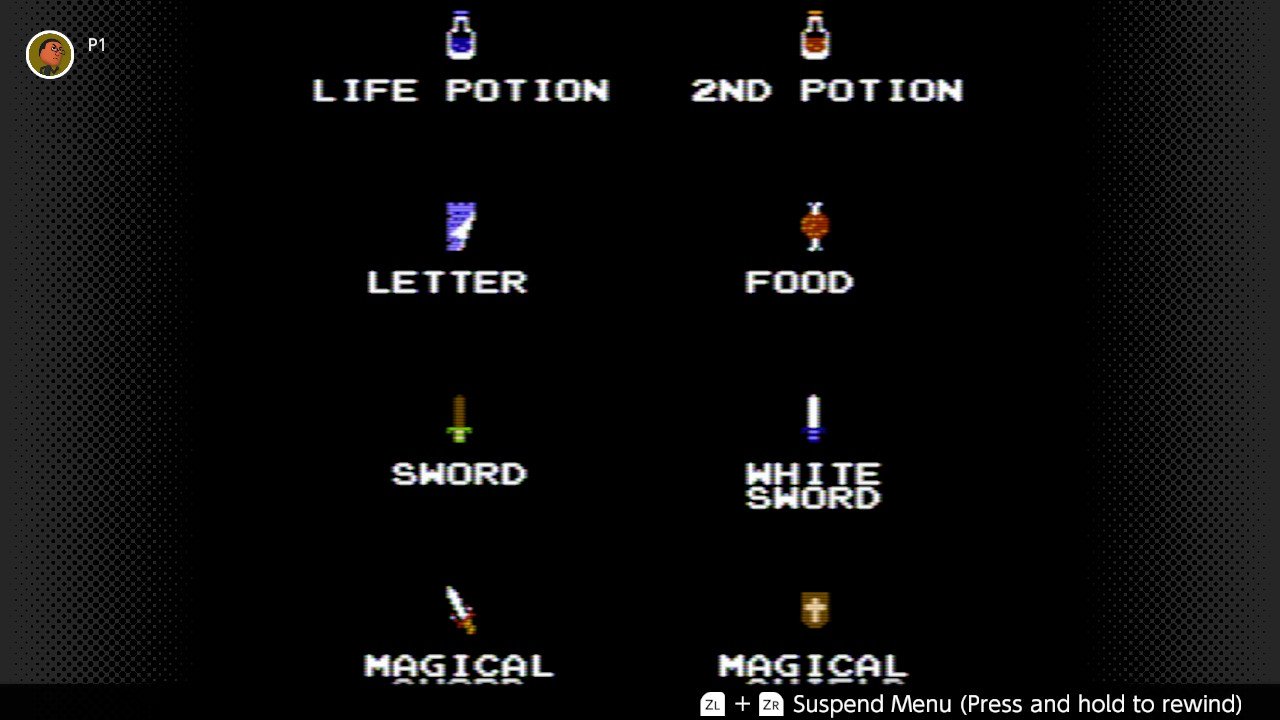
In terms of control, it was a case of what things absolutely needed to be assigned button presses or combinations. The rest, either you just have it work once attained. Once you grab your sword, its always the A button, you’ll always have a shield equipped, though getting the big shield will mean you can block just about everything if you’re not attacking. Once you get the Power Bracelet, you’ll just move rocks if they are able to, no need to equip. The B button is then where you’ll have to use your selected tool once you start amassing treasures as the game calls them. From the boomerang, to bombs, arrows, to magic wands, you’ll have to press start to change out which also serves to pause the action should you need to take a break.
This is presented in the top down perspective, so no platforms to worry about falling through. Using the direction pad, you’ll be moving in 4 directions, you can’t move diagonally, though neither most of your foes.
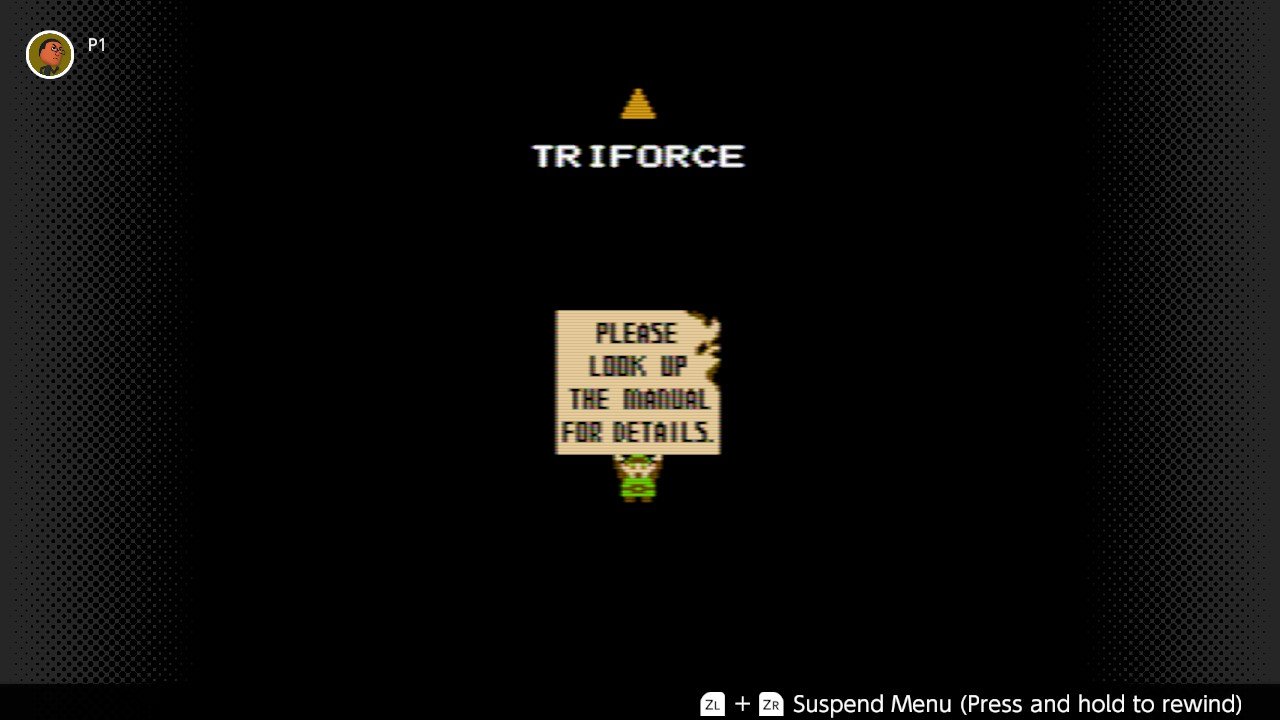
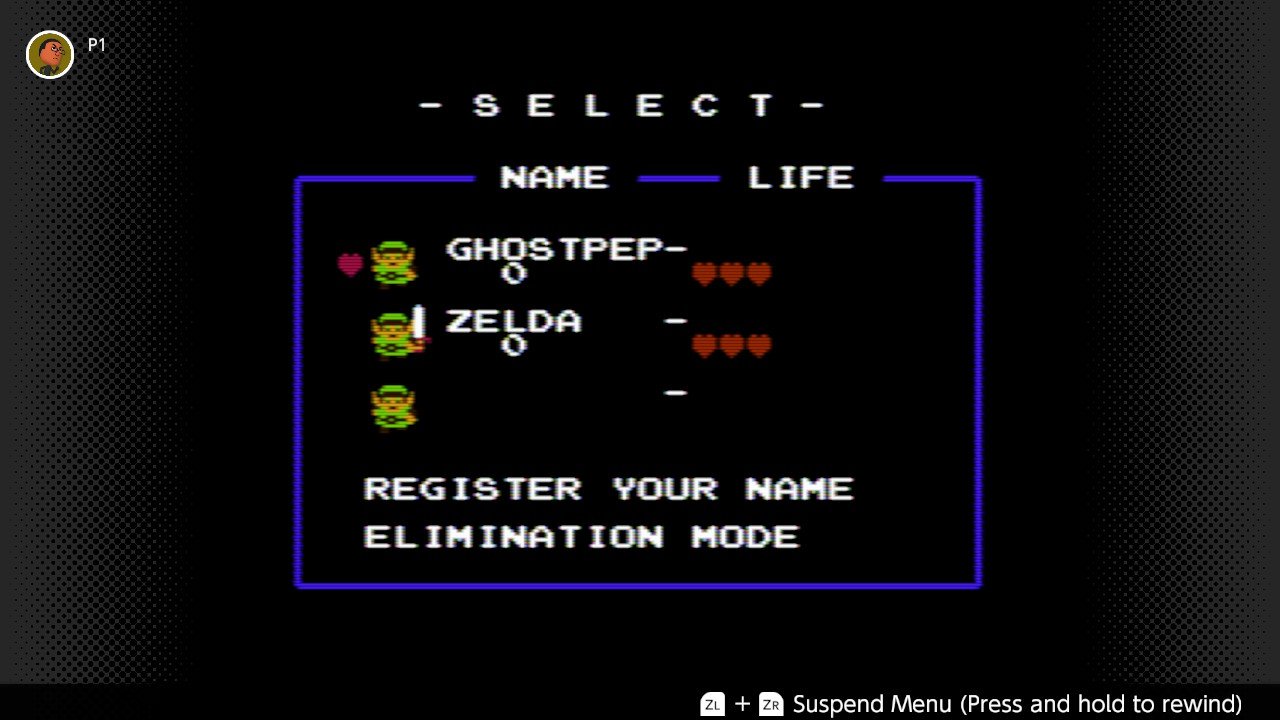
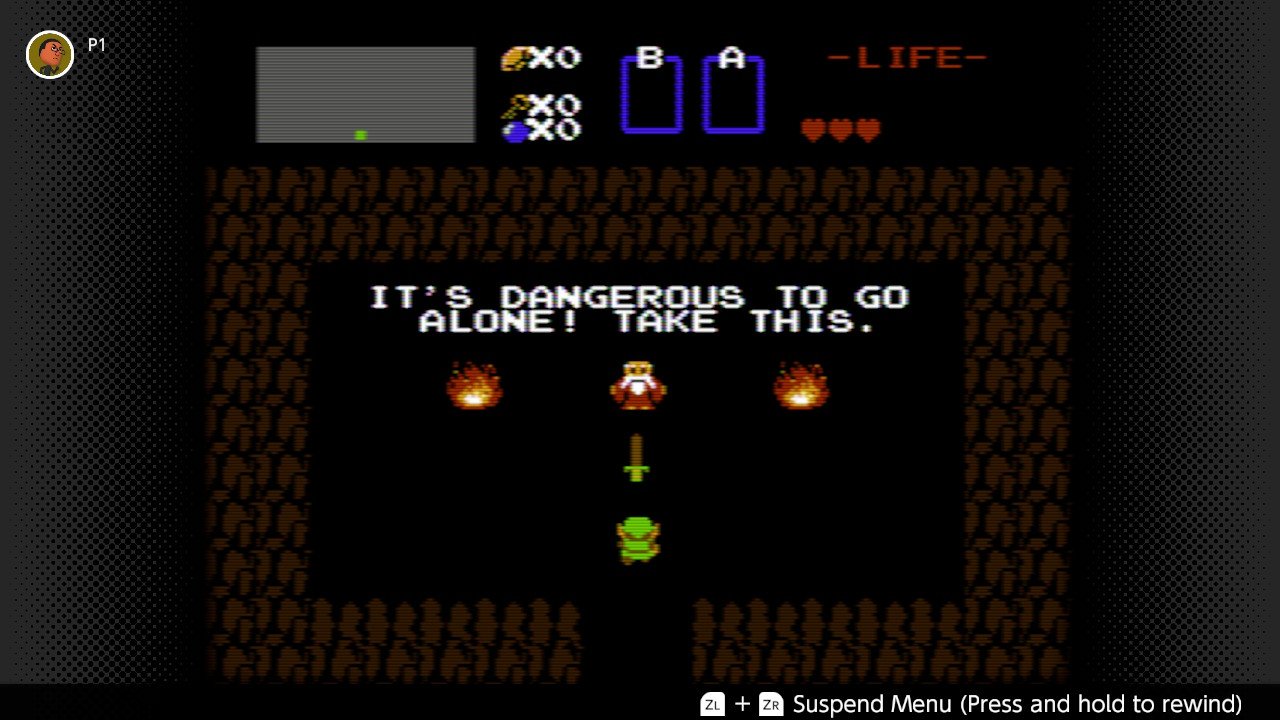
Gameplay wise, the foundation is largely set. Though I’d call it just that, a foundation that later entries expand, deviate, solidify, then deconstruct in Breath of The Wild. This is from a time where reading the instruction manual is a must, as while the game’s title screen, later story crawl gives the run down as well as items you’ll be getting, that’s it. You put your name, enter the first cave you see, get the wood sword from the old man, he disappears, and that’s it. You’ll have to explore this vast overworld to find dungeons, defeat the boss, get the piece of the Triforce of Wisdom, then find the final dungeon to beat Ganon, save Zelda, wait for the sequel.
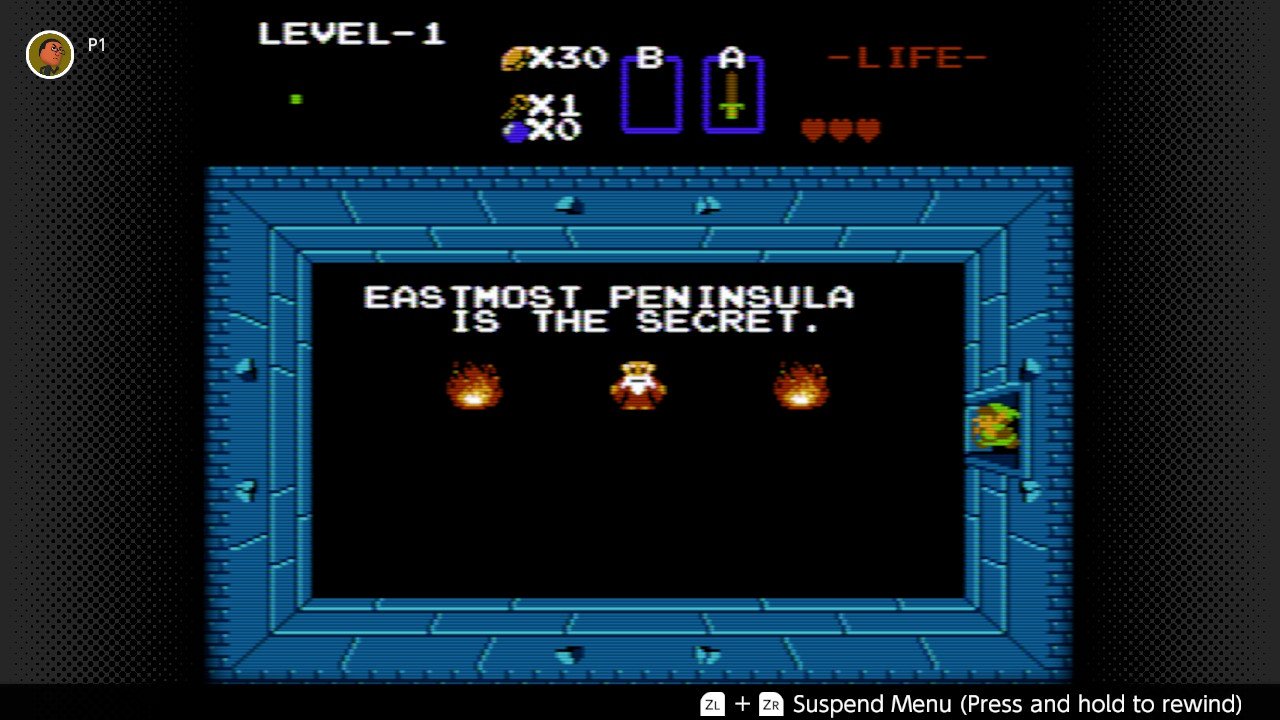
This is what would be called a ‘Nintendo Power game’ as unless you had Nintendo Power, Nintendo’s premier gaming magazine that would give tips and mini-walktrhoughs, strap in and prepare to wander and wonder where your time went. You’ll get some really vague hints from the various old men and women who are spread out in the overworld, though most are hidden either in bushes that need to be burnt, rocks that need to be pulled, or bomb out rocks. There are shop keepers that sell big shields, hearts, bombs, they too are scattered throughout. In the dungeons, there will be monsters or people who give hints about various, random facts such as what some mid bosses or bosses don’t like.
Speaking of which, the dungeon objective is to beat the boss and get the Triforce piece, though it is anything but straight forward. Each dungeon also houses a particular item that are sometimes are nice to have, other times required to continue forward. There’s also the map and compass to help you navigate, though technically not required if you can’t be bothered or just miss it outright. There’s locked doors that need keys though, some that need to be pushed by a block, or more often than not, clear out the room, the door opens.
Getting back to the foundation theme and how rough it is, you technically don’t have to follow the dungeon order. You could go to dungeon 3 right away once you have the sword if you’re confident in your skills for example. You also don’t have to use all the keys given to you in a particular dungeon so you could hoard some for the next one.
While this could be considered one of the earliest ‘open world’ titles, and that the joy was exploring a world of such scale back then, now seems a bit of a chore, though if you’re playing on Switch, save states and rewind are a thing and I’d recommend to use them ad nasueum. Its actually kind of required as the way to save progress back then was to do essentially a ritual of pressing and holding the power and reset buttons. Even then, it would take back to the first screen, so help you if the next dungeon was at one of the extreme corners. Once you get the recorder (The flute in level 5) you can use it to go to dungeon entrances, that mitigates it a bit. Use the modern tools available to you today, respect your time, some struggles are best left in the past.
Fun Factor: Kinda Relative.
By today’s standards, this game design would be considered borderline insane by simply dropping you off into the overworld, no direction, trial and error, push and burn every rock and bush respectively. Still, for those that fancy themselves game historians/archaeologists, seeing, hearing and playing this would be like seeing paintings of your ancestors from ancient times: You can see the resemblance that carries to the present day, but also appreciate how far we’ve come.
Whether you put in the NES cart (and make sure the battery backup is fresh), load it up on the GBA NES classics, Wii/Wii U Virtual Console, NES Classic, Nintendo Switch Online, or the many, many other ways I may not have mentioned, if you value your time, definitely have that walk through/let’s play handy after being stuck wandering aimlessly for hours. Lore wise, you’re not missing much as the while the next one, Adventure of Link just casually mentions yeah, you did the thing, with interesting re-interpretations of some of the foes here, that’s it. Its history you can play, you’ll appreciate the future entries that much more.