Legend of Zelda: Link To The Past
Now you’re playing with Power…Legendary Power!!
2 Worlds in 1 Cartridge.
Publisher: Nintendo
Developer: Nintendo EAD (Super Famicom/SNES) Flagship/Nintendo R&D 2 (GBA) Grezzo (Four Swords Anniversary on Dsi)
Platforms: SNES: Virtual Console on Wii, Wii U, NSO. GBA: GBA, NSO+
With the introduction of the 16 bit era, the Super Nintendo/Super Famicom was given a rousing introduction with the likes of Super Mario World in terms of a big adventure, F-Zero and Pilotwings with their technical prowess for the time. Though with Zelda’s 3rd entry, one could say it was solidified what we were in for aside from just doubling the bits. From its introduction, the opening sequence, and then starting your quest proper, many would be satisfied, thinking ok, this is great. But then, you’re brought into the Dark World where it was essentially 2 worlds-equivalent of the original Zelda on the NES, where minds were blown. You’re in deep now.
Fast forward to the end of ‘02, this 16-bit sojourn can now be played in the palm of your hand on the 32 bit Game Boy Advance. Refining this barely a decade old classic was no small feat, and for good measure introduced something that was unthinkable even with its 3D outings: multiplayer thanks to the folks at Flagship (An independent developer funded by Capcom, Sega and Nintendo until it was merged into Capcom proper in ‘07) who were further entrusted with one of Nintendo’s sacred franchises after the success of Oracle of Ages/Season on Game Boy Color. For the purposes of this review, I’ll be going back and forth between the versions as there are enough differences that add up to almost completely different experiences.
Sound: Its Stacked.

On this front, it takes 8-bit soundtracks, now with an orchestra that the SPC sound chip to new heights. For your ears back in ‘92, this may as well been hearing a live symphony starting from the title screen, to the final battle. When you heard the Light World overworld music compared to the NES original, you knew this was something special. The layering of instrumentation was on another level, the sound effects bringing up the rear. Hearing something as simple as your sword slash, grabbing rupies, the rumbling of buildings being elevated was another step closer into immersion.
The GBA version does pretty well for itself, as it all on one chip, but it knows what to keep the same, and what to expand. I played both of them on Nintendo Switch, both docked and undocked, I noticed that the GBA version does sound a bit ‘scratchy’ compared to the SNES version. Understandable as the GBA version was made with the portable speaker in mind, though it this is remedied if you’re playing handheld on headphones. There are other minor flourishes such as the drums in the Light World theme comes to forefront more. They do add some nice touches such as Link sounding like Young Link from Ocarina of Time/Majora’s Mask/Smash Bros as when making sword slashes, taking hits and falling into pits.
Graphics: 16 Bits, So Many Colors.
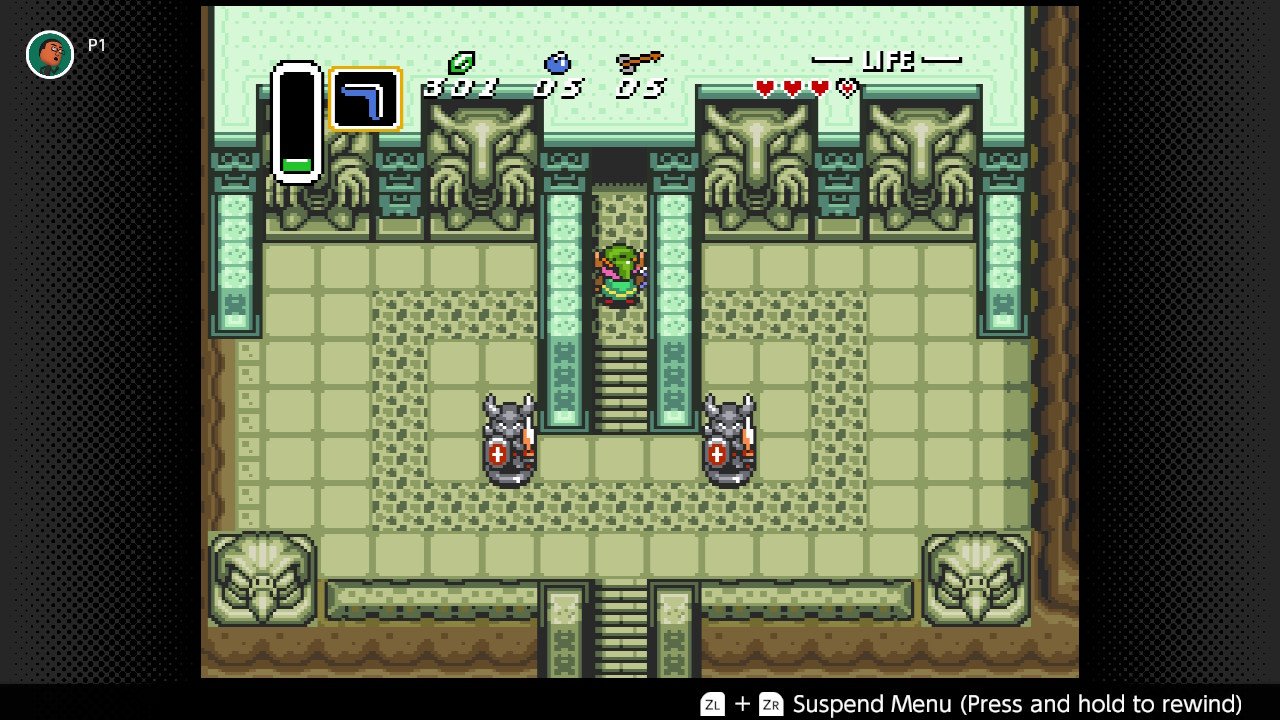
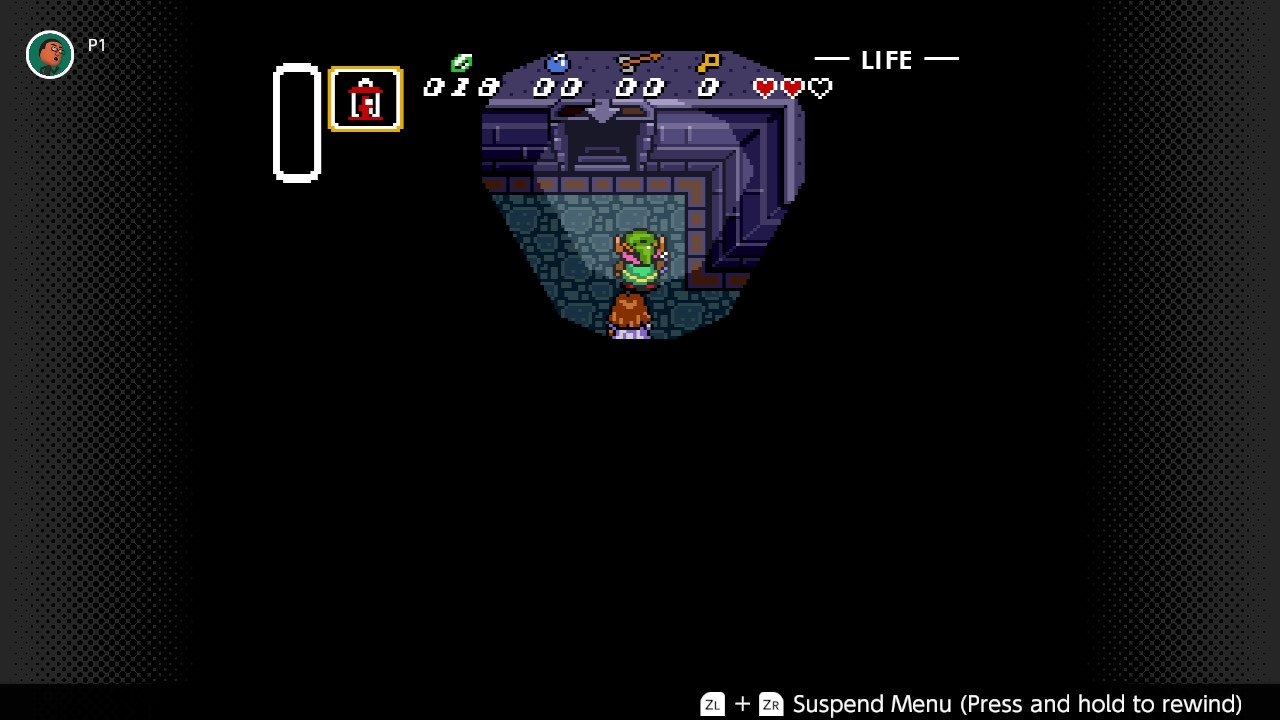
The 16 bit pixel art remains timeless, with so many colors to give the Light World and its many, many sections expanded from Adventure of Link on the NES. The green grass lands from the overworld, to the darker ones in the Lost Woods, to the mountains and caves of with shades of browns, yellows in the desert, and that’s just Hyrule. The wastelands of the Dark World give off this mucky feel, the ruins of a once sacred land now in exotic, otherworldy hues. The map showcases how big this outing is with its famous mode 7 graphics, going for little bit extra, they could have just done a flat map and be done with it. New the series is various stages of lighting, a big upgrade compared compared to its 8-bit predecessors. It can be pitch dark, to 25, 50 percent depending on how many torches you find and light, to full if you find them all for example.
Also new is layers within a specific floor in dungeons, you’ll be on bottom floor for example, looking at a bridge above, a subtle guide of where to go. When you finally make and cross, you’ll look down there, foes still active as ever, taunting you to come down. Character sprites now have scale, from our Hylian/humanoids, to the various creatures and monsters. We got rats to giant dudes in armor as a dungeon boss, and everything in between, it really lives up to one of its North American slogans: Now you’re Playing with Power…Super Power!
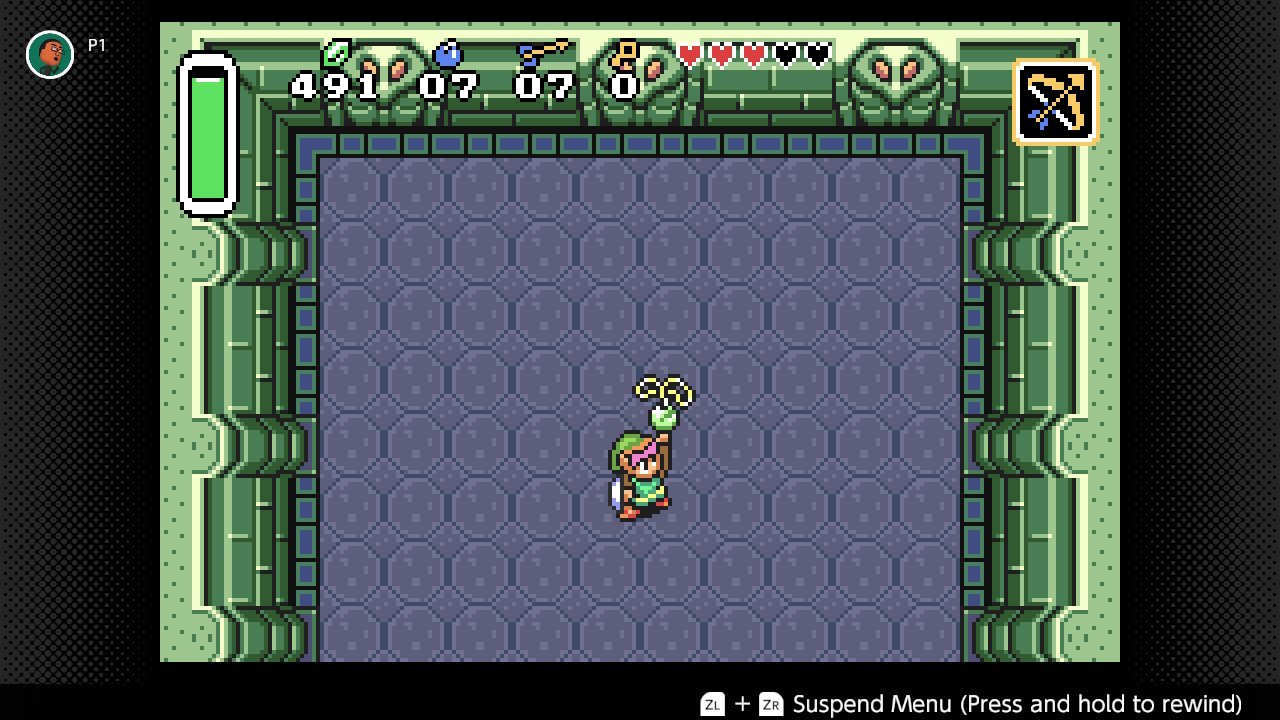
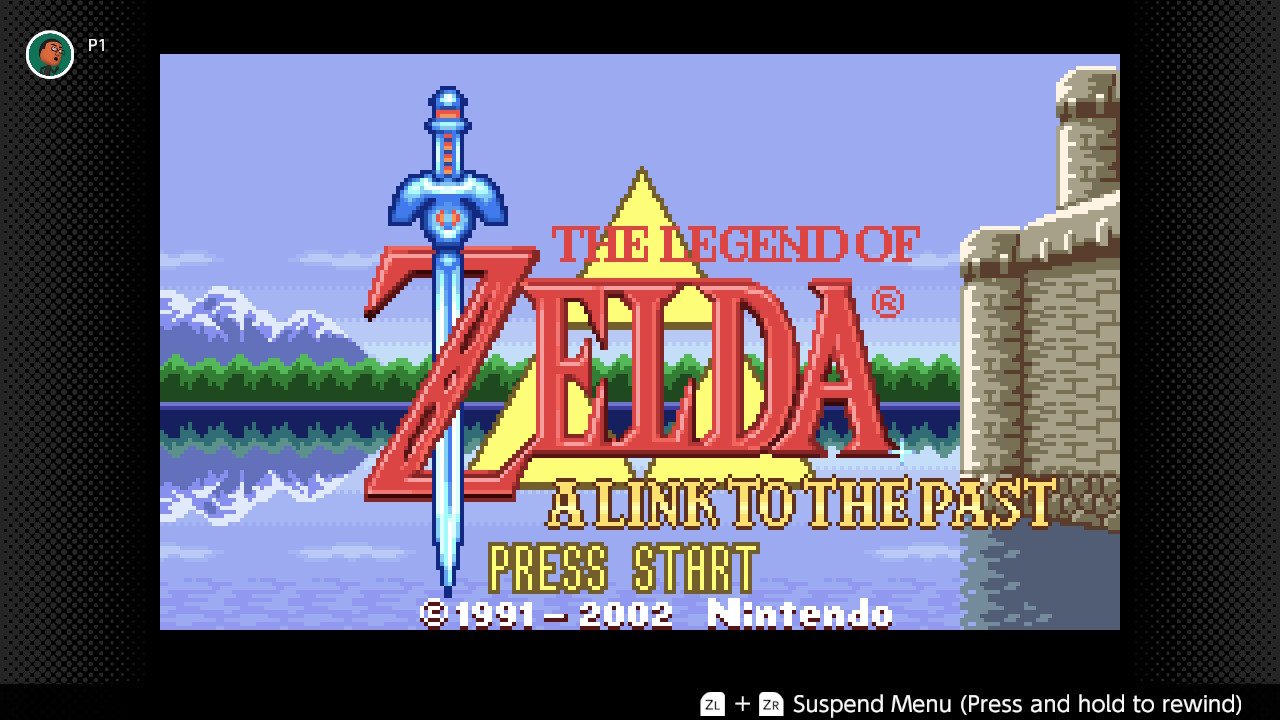
For the GBA version, at first glance, it may look largely the same, though keen eyes will spot little differences such as from the get go where Link’s lamp has dithering around the edges vs in the original it was just shades. From the title screen where Master Sword looks like it had an eye in the original, to the uniform look established in Ocarina of Time. There are many more, just know much like the sound, almost nothing is lost in translation. There is the option when starting your save file to set the amount of internal brightness, this was a hold over of the original GBA’s model that lacked any internal lighting of any kind, though future official (and unofficial mod kits) iterations like the GBA SP fixed this.
Control/Gameplay: Setting the Standard.
There’s quite a bit to go through, and without droning on and on like an instruction manual, a good tl;dr version is that it goes back to the top down view from the Zelda 1, expanding the sense of scale of from Zelda 2, fusing them while taking advantage of what the SNES could accomplish.
You’ll start easy enough heeding Princess Zelda’s telepathic call for help, a step behind your uncle as you gives his sword and shield after…running out of breath? Took one hit from a guard and just noped out of this? Doesn’t matter, once you have both, the quest begins to rescue Zelda, get the Master Sword, beat the wizard Aganahim, only to realize it was Ganon pulling the strings. From there, its about finding the seven maidens descended from the sages who sealed up the Dark World so long ago. Along the way, you’ll get all the gear, from something as simple as a bug net, to an emblem simply called Bombos (Gee, I wonder what that does…) to aid you in this epic.
You’ll meet village elders, blind thieves, fortune tellers, fairies asking for ‘donations’, primal Zoras, smithing dwarves, etc with their own wants and needs. They’ll help with hints and items as you traverse both worlds. Speaking of which, this is the title’s differentiation, as one overworld would’ve been enough. No, after a certain point, you’ll be thrust into the Dark World, while having the same dimensions, its overworld is different enough, this is not just a simple palette swap. For some side quests, you’ll have to weave in and out each world though you’ll have to balance using your magic mirror, as it will send you there, but you’ll have to use its form your location to get back. There are portals in the Dark World, though some are well hidden.
Dungeons got a major upgrade, as they can span multiple basement and top floors. The ‘workflow’ was refined here, as generally you’ll want to find the map, the compass, the ‘treasure’ which is just the tool/gear, and the big key aka the boss key to enter the boss lair. More often than not, you’ll use the treasure you just got to beat it. Of course, its not that simple with puzzles, keys to get and sometimes secrets to find to keep things fresh. Getting to the next dungeon is no small feat as its entrance is not that direct, may need to talk to someone or get something for it to open up.
In the original, its difficulty could be considered on the higher end, though this is remedied by exploring the worlds to get heart pieces to expand your life, getting sword upgrades to dish out more punishment, as well strengthening your various other tools to supplement combat as not every foe is weak to your sword. The GBA version does make things a smidge easier, most likely it had to respect your time on a handheld that originally ran on 2 AA batteries.
Control wise, the SNES version makes use of all its buttons, the 4 face buttons, triggers, start and select. Similar to Zelda 1, your sword is always in play, and you’ll have to select the active tool from your arsenal/proverbial tool box. The magic meter returns from Zelda 2, though not every item is tied to it this time around. The GBA version doesn’t have the X/Y buttons, no matter, they make it work by making the trigger buttons do a little more work. This maybe a bit jarring if you have muscle memory from the SNES, but shouldn’t take too long to acclimate. In either case, it has a sense of pace and cadence; I found myself reflecting on how I started out with essentially a coffee can for a shield to one that deflects laser beams for example.
I’ll note that the GBA version has a newer localization, with vocabulary the reflects how this title fits in the other Zelda adventures that came out previously. Little things such as how it was just wise men who sealed the Golden Land to seven sages, to just more direct dialogue shows how far localization has come.
The GBA version has the multiplayer portion called Four Swords, which in starts its own spin-off. As it sounds, its multiplayer Zelda where Link has been split into 4, now distinguished by colored tunics. Vaati is on the loose, and its up to you and your other selves seal him back. You’ll have to cooperate, and at times low-key compete for rupees with your Links as they get through each level, having to split the treasures/tools to accomplish your task. It was re-released as a solo entry as a freebie during Zelda’s 25th anniversary on DSi (And playable on 3DS thanks to backwards compatibility) where you could play by yourself, give the other Links simple commands, though on NSO+, its as easy as inviting 1-3 other friends to join your session. Beating it unlocks a special palace in Link to The Past, the Palace of the Four Sword. Your mileage may vary, but it is a neat bonus, and if you ever wondered about the origins of the 4 Swords sub-series, this is it.
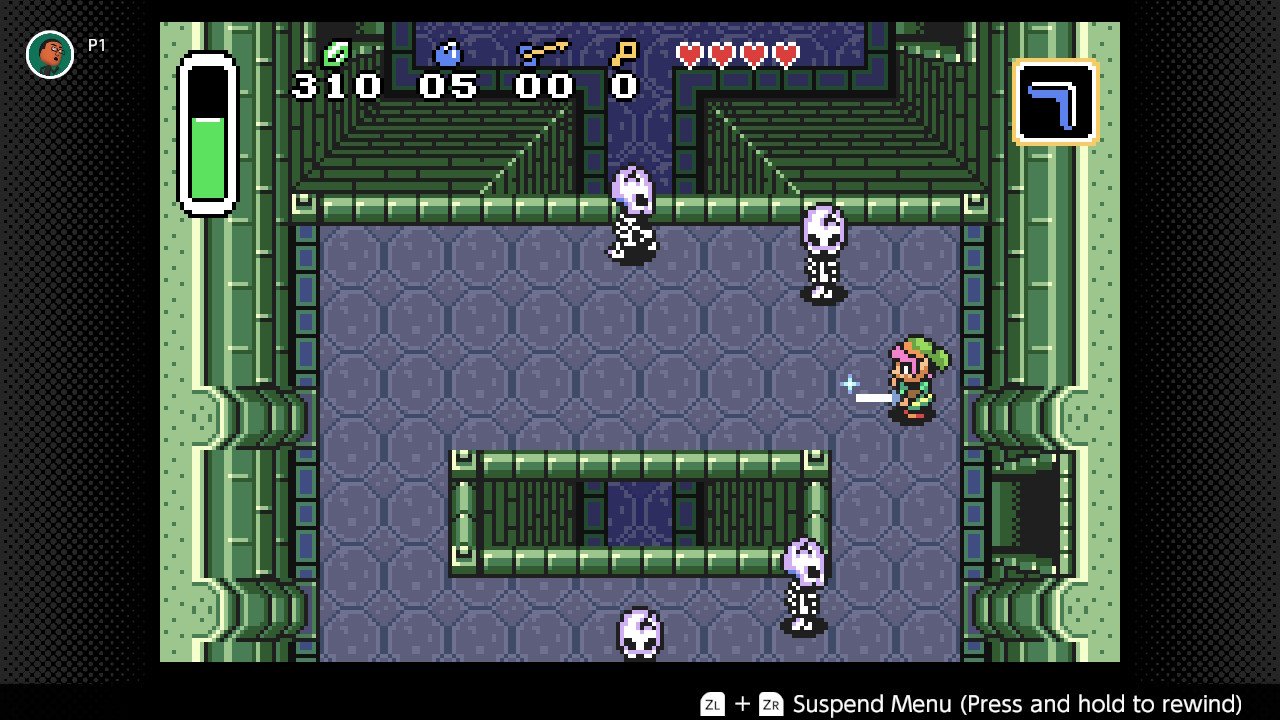
Fun Factor: Fun in The Sun, Fun in The Dark!
They say 3rd time’s a charm, and it is indeed true here for Zelda’s 3rd entry. Taking the basic template of Zelda 1, taking the wild ideas and departures from Zelda 2, it is honed, reigned in, while at the same time, flourished to heights never thought possible. At times it may be confusing, feel lost in the vast overworlds. The fortune teller does help, but I acknowledge that in the age of the internet, where guides and lets plays are plentiful (alongside NSO’s save state feature) this grand, sweeping epic is doable. Its sense of adventure is timeless and lays down the almost-finished foundation and formula the series will follow from here until its deconstructed and rebuilt in Breath of The Wild. It will be the title’s next entry, where it will finish said foundation, do the unthinkable of fitting another epic quest that fits in your pocket…Game Boy Pocket. In the meantime, a game where having a killer bee as a weapon melds technical capability and creative out-of-box thinking is an all-time-timeless-classic to me.