Sonic Origins Plus
'90s 'tude, '20s tech.
Blast Proccessing for OGs and New Gs.
Publisher Sega
Developer: Sonic Team (Sonic 1, CD), Sega Technical Institute (Sonic 2, Sonic 3, Sonic & Knuckles), Sonic Team/Headcannon (Origins Plus)
Platforms: Nintendo Switch, PS4, Xbox One, PC (Reviewed)
In the late 80s, arcade vet Sega got into the 16 bit machine race with the Mega Drive, Sega Genesis as it was known in the Americas. Initially packing in Altered Beast, and boasting decent arcade ports of their own titles at the time, it still didn’t quite make a dent in Nintendo’s dominance in North America. Their 8 bit predecessor, the Master System, or the SG-1000 Mk III known everywhere else was an also-ran, with the exception of its overwhelming popularity in Brazil, though that’s another story. In Europe, the ubiquity of home computers such as the ZX Spectrum, Amiga, Commodore 64 meant consoles were an expensive, but curious oddity. Sega needed a hit, a re-launch if they were to have any success in the home market. Queue the creation of Sonic Team, with key members programmer Yuji Naka, Noato Oshima as the artist, and Hirokazu Yasuhara as the level designer. They were tasked to create not only a mascot, but also make a title that would outpace whatever Nintendo was doing at the time.
Enter Project Needlemouse aka Sonic the Hedgehog. Taking advantage of the Genesis hardware, it presented a faster, bigger, more explosive style of gameplay not seen at the time. Coupled with 90s attitude, impressive art direction that would make seem on par of the Super Nintendo/Famicom and the lagging PC Engine aka the Turbo Grafx 16 in America (that’s also another story in it of itself). It was intelligently packed in ‘91 along with an ad campaign that succeeded its ‘Genesis does what Nintendon’t’ and the console wars were on.
They were quick to work on a follow up, though it directly number sequel, Sonic the Hedgehog 2 would be developed by Sega’s American development branch, Sega Technical Institute (Headed by Mark Cerny, a familiar name for Sony fans), and Sonic CD, would be developed by Sonic Team for the aptly named Sega CD/ Mega CD elsewhere. One could say that high off the North American and to an extent European success, the rift between Sega HQ and America began here, but the successes of both titles meant that would be in the background…for now.
In ‘94, Sega Technical Institute was at it again, Sonic the Hedgehog’s 3 high ambitions of being the ultimate in speedy 2D action platforming had to be split into 2 parts: Sonic 3 and Sonic & Knuckles due to time constraints. Though Sonic & Knuckles would have the honor of being the only Genesis cart to have lock-on tech, meaning if you put both titles together, it was the ultimate journey. And because why not, put Sonic 2 and play with Knuckles the echidna (and for giggles, put Sonic 1 or any other cart to get randomly generated Blue Sphere special stages.)
Over the years, these titles would go on to be re-released in many, many formats and other platforms once Sega got out of the hardware business. From Nintendo, to Sony and Microsoft’s systems, PC, even smartphones, there were plenty chances for a new generation of gamers to experience that need to go fast, collect many rings and get shiny emeralds of different colors. Sonic Origins Plus is another compilation that does what excellent classic compilations do: retain the classic ports that can be played as it was back in the 90s, or experience them with QOL features that give these timeless games a fresh coat of proverbial paint. Aside from a slight blemish of said proverbial paint which I’ll talk about next, how does collection fare compare to others before it?
For this review, I’ll be reviewing the ‘Plus’ package that has the games Sonic the Hedgehog 1, 2, CD, Sonic 3 and Knuckles. I’ll also be reviewing how Origins QOL features. I acknowledge the dozen Game Gear titles, they are competent ports, a piece of history worth checking out.
Sound: Fans Come Through.

Sega’s initial offerings on the Genesis while competent, and boasted visuals that paled to the NES, its sound was…competent but not iconic. To this day, many Gen X and Gen Y gamers can probably hum or whistle 1st party NES games like Mario, Zelda, Metroid, Kid Icarus to this day. Sonic the Hedgehog changed all that from its initial ‘Segaaaa’ statement to the credits which is an expertly composed medley. Masato Nakamura, member of Dreams Come True did the music gave it a certain edge and musicality not heard in prior Genesis titles
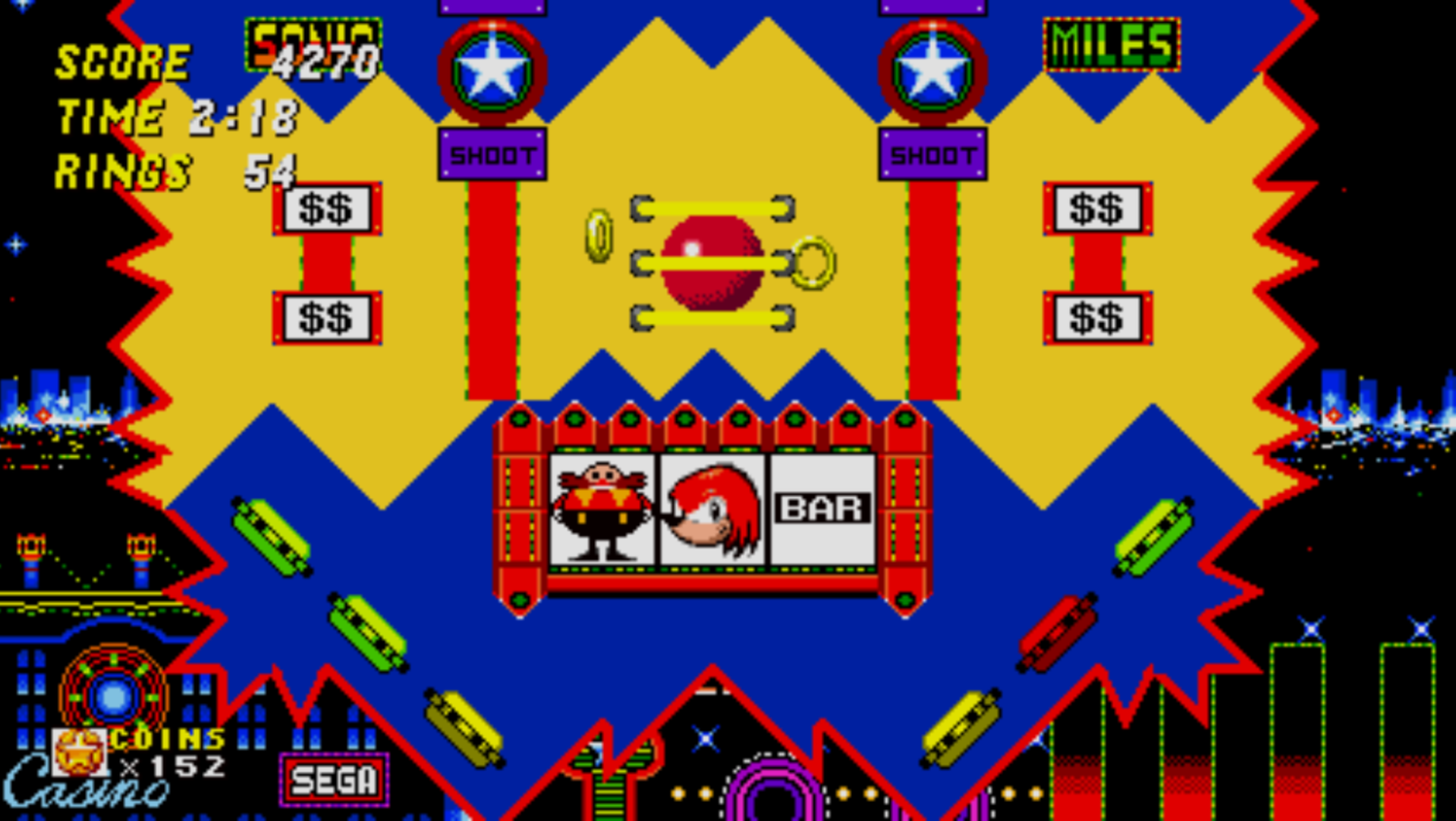
Sonic 2 continued this tradition with tracks covering its various locales such as ancient aquatic ruins, a casino, a futuristic oil field, etc. e For good measure, the 2 player split screen mode of each of its zones were completely original, with their own sense of jauntiness.
Sonic CD took advantage of its CD format that gave crystal clear compositions. You now can switch the soundtrack either the US or Japanese versions. Naofumi Hataya and Masafumi Ogata did the Japanese soundtrack, influenced by house and techno. Spencer Nilsen and David Young did the US version, you can now decide for yourself in one package which one you prefer. Also each stage’s ‘past’ and ‘future’ versions matches their respective era.
For Sonic 3 and Knuckles, this is where things get…confusing. For reference, it it is commonly known that Michael Jackson, and avid Sega fan who had his own game, Moonwalker as a launch title. Officially Sega denies this, though Yuji Naka went on to say they toured his estate during development. Tour director Brax Buxer, with Doug Grigsby III and Cirocco Jones with Jackson created track after track, ultimately resulting in Carnival Night, Ice Cap, Launch Base, and the Knuckles theme when he come onscreen and the credits for Sonic 3 originally. Prior re-releases had no issues but for Origins, they are missing, replaced with what were the original versions before Michael’s involvement. Sonic & Knuckles music remains intact, as with all the music, now presented in clear stereo sound, whatever your audio setup is.
Now there are many stories floating out there regarding why he went uncredited, I encourage you to check it out for yourself. For our purposes, this is otherwise, a ding on this compilation’s soundtrack…if you buy or have bought the console versions. For me, you can’t undo decades of countless hours in these particular zones only to be replaced by competent, but generic filler. Imagine watching Star Wars and its iconic overture just replaced for convoluted reasons, your brain anticipates those notes, melodies, and rhythms. For newer generations, this is akin to carving out, rewriting history for reasons Sega can’t or won’t explain. If you get the PC version, thankfully, you can mod the original music back in, hear it as was released back in ‘94. For this, I would give the PC version the edge for what otherwise is an excellent curation.
Graphics: Slick & Sleek.

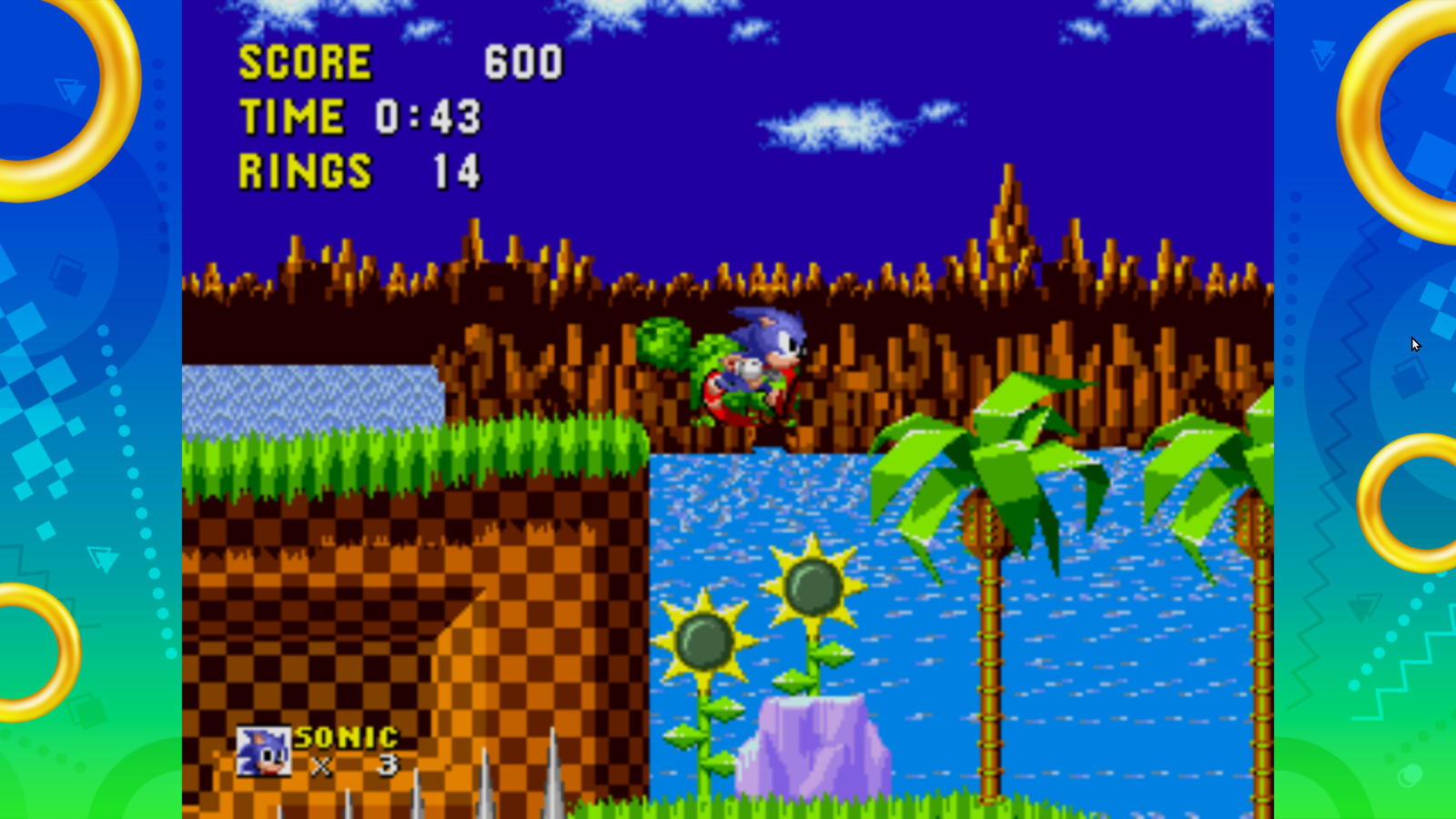
Big, bright, bold art style has stayed eternally cool, whether you play it in its 4:3 format, or in the modern, 16:9 display. In the modern display, little flourishes like the ring animations moving fluidly, all the special stages have more liquid-like frames that couldn’t quite be expressed on 16 bit hardware. Also added in are cutscenes that go in and out of each title for extra flavor. In museum mode, you can see key art, manuals from each region, posters, etc. Not much else to say, as each title captures the distinct, zones, enemies, environmental effects and hazards such as water, lava, crushing rocks, showing that while at the time, didn’t have the relatively infinite color palette of the Super Nintendo, used what it had to the fullest.
Control/Gameplay: Best of All Worlds.
For those that aren’t familiar, which I find hard to believe though if you haven’t been gaming for 10 years, I can understand, this is a story about a blue hedgehog named Sonic who can run really fast to thwart the schemes of Dr. Ivo ‘Eggman’ Robotnik who seeks to enslave animals, collect the chaos emeralds, jewels of incomprehensible power for world domination. You’ll run across the level, called zones to collect rings for extra lives, and for entering the special stages. You can jump on enemies, if you press down while running curl into a deadly ball. Compared to other games at the time, there is no dedicated run button, you collect speed the more you keep moving. If you hit enemies while running and you have rings, you’ll be pushed back and lose them, but you can catch some of them back as they spill out. Your goal is to reach the end of the stage, 3 acts in Sonic 1, then 2 acts in part 2. In 3 and Sonic & Knucles you’ll contend with a mid boss to clear the stage. And then its the end stage boss which is usually Dr. Eggman with many, many contraptions.
In classic mode, from 2 onwards, Sonic will be able to spin dash by pressing down and jump which will literally get you up to speed, curled up to take out any foes if you don’t enough space to go fast. Sonic CD add the super peel where you press up and jump, though why would you go full throttle nose first into traps and foes. In modern mode, there’s the drop dash from Sonic Mania, which has you go down quickly than dashing out.
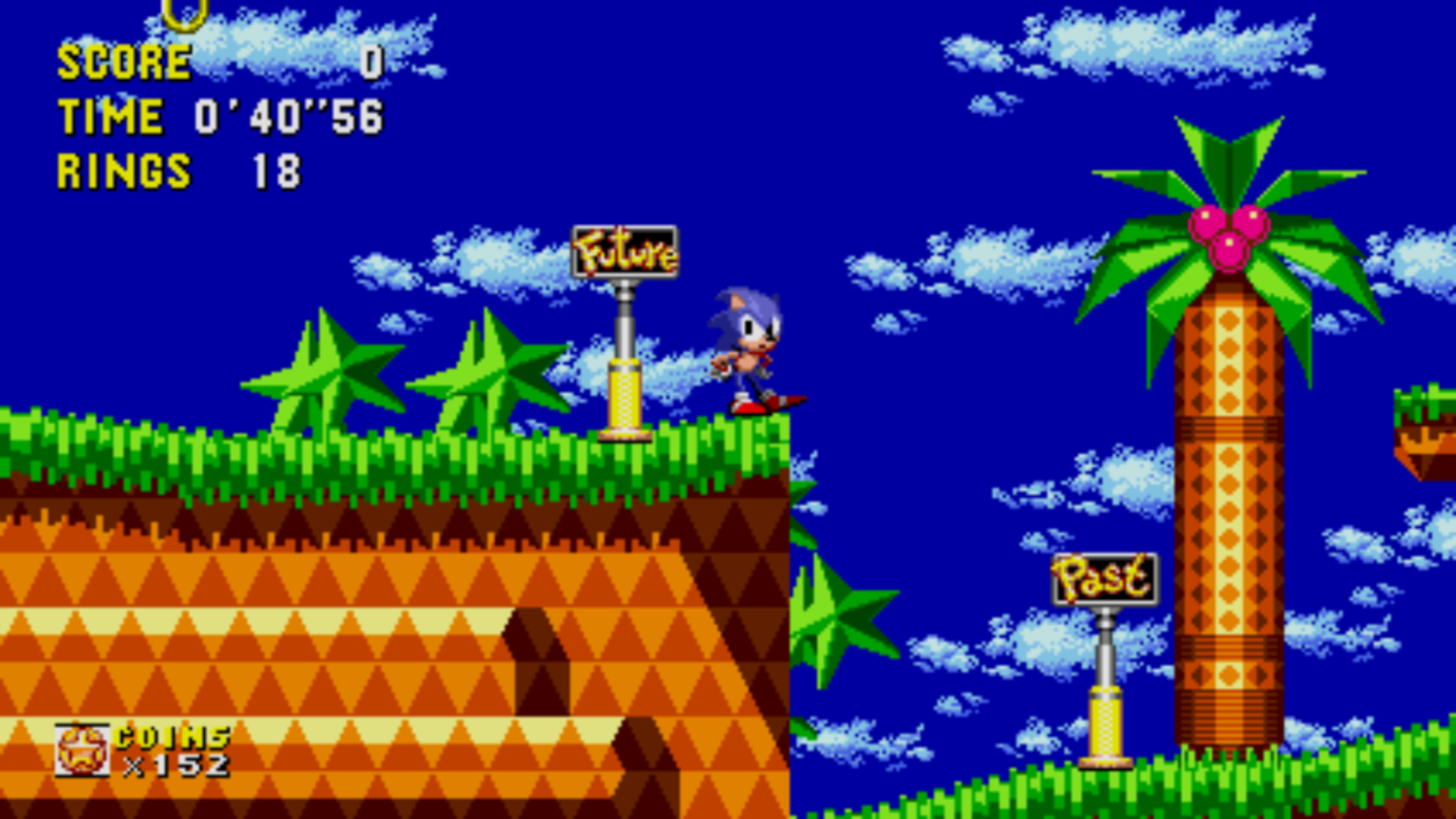
Speaking of which, Sonic CD adds the extra dimension of time where you can visit past and future versions of the zone you’re in. You past the goal post which says its name, and will need enough road to run to go into the past or future. Past versions will be as advertised, wild and sometimes overgrown untamed versions where you have the extra task to find the transporter that is messing up the environment. Future is a bleak, cyber punish version where nature is robbed of its essence, though if you cleaned up the past, you’ll find the future a perfect harmony of tech and trees.
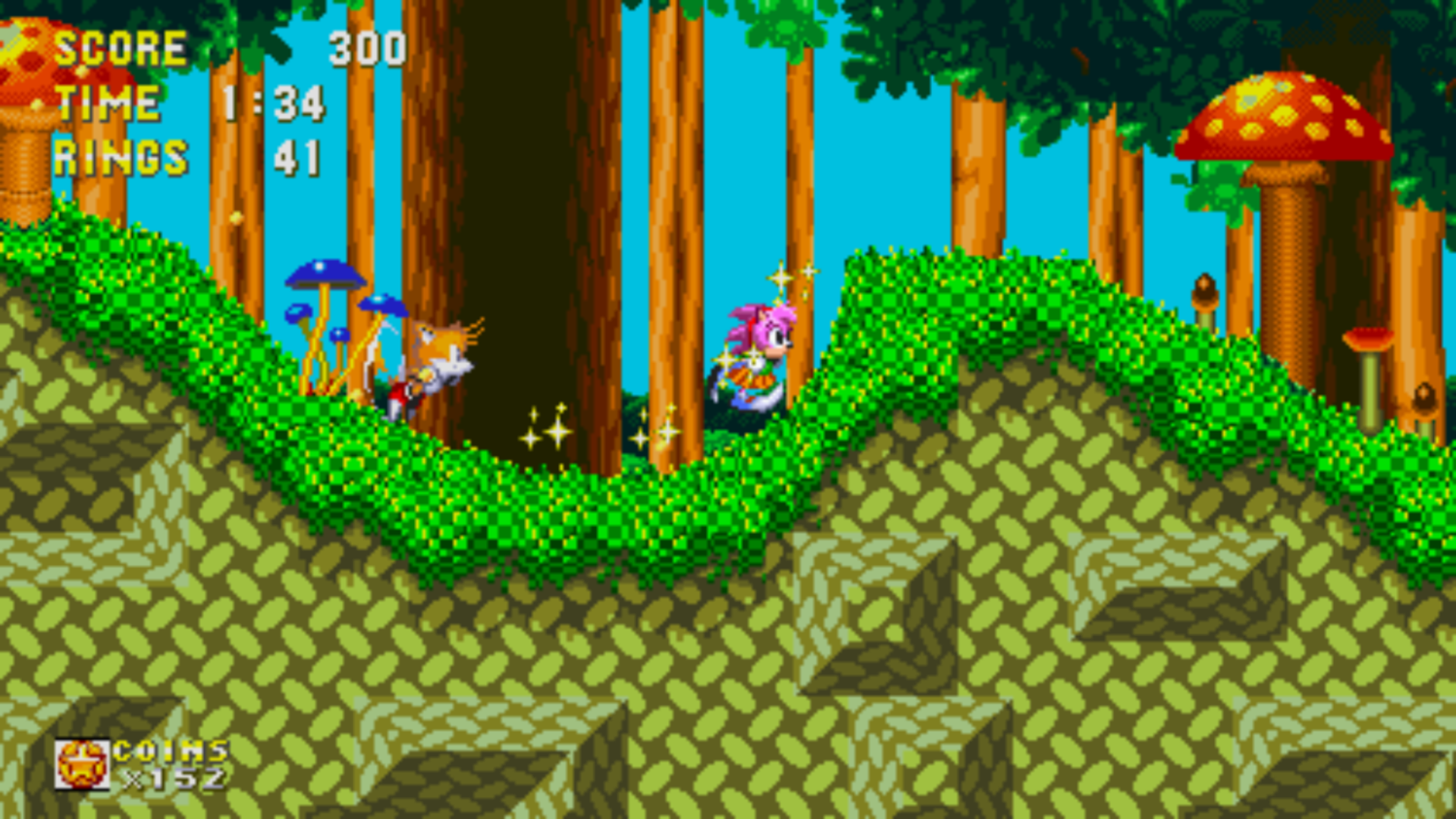
Along the way, Sonic will have an ever growing cast of allies such as Miles ‘Tails’ Prower, a two tailed fox who in 2 in 1 player mode tags along and is technically immortal, will always come back even if you go too fast. In modern mode, you can play as him though in 1 and 2, CD, though there’s nothing that stands out from Sonic. From 3, he now has the ability to fly for a short time, can carry Sonic if doing 2 player, and can swim in water levels. Knuckles the echidna, he can glide if you press jump twice and can cling to walls with said knuckles. He jumps a touch lower though, not able to reach some of those places. New to Origins Plus, is the addition of Amy Rose, Sonic’s self proclaimed girlfriend who if you press jump twice protects herself with her hammer. Also in Origins Plus, you can have a Knuckles and Tails, or Amy and Tails combo in 3 & Knuckles, giving a fresh twist even if you’ know these zones inside and out.
In classic mode, you’ll start out with three lives, and can get continues along the way after beating levels with high enough scores, usually a chunk of those points gotten from special stages. Lose those lives, hope you have those continues stocked up. From Sonic 3 & Knuckles, you can have save files that can keep track of your progress, as it will be a bit of a journey from Angel Island all the way to Death Egg. In modern mode, lives don’t matter, continues don’t matter, and progress can be saved if you clear a zone, respecting your time. During this, all those rings and continues will be turned into P-coins which can be used to either spend in its museum for various art, music and other miscellaneous treats, or can be used if you fail a special stage for chaos emeralds right away. This is a smart use as back in day, depending on the game, your window of getting all the chaos emeralds to get the good ending gets smaller and smaller as you go along.
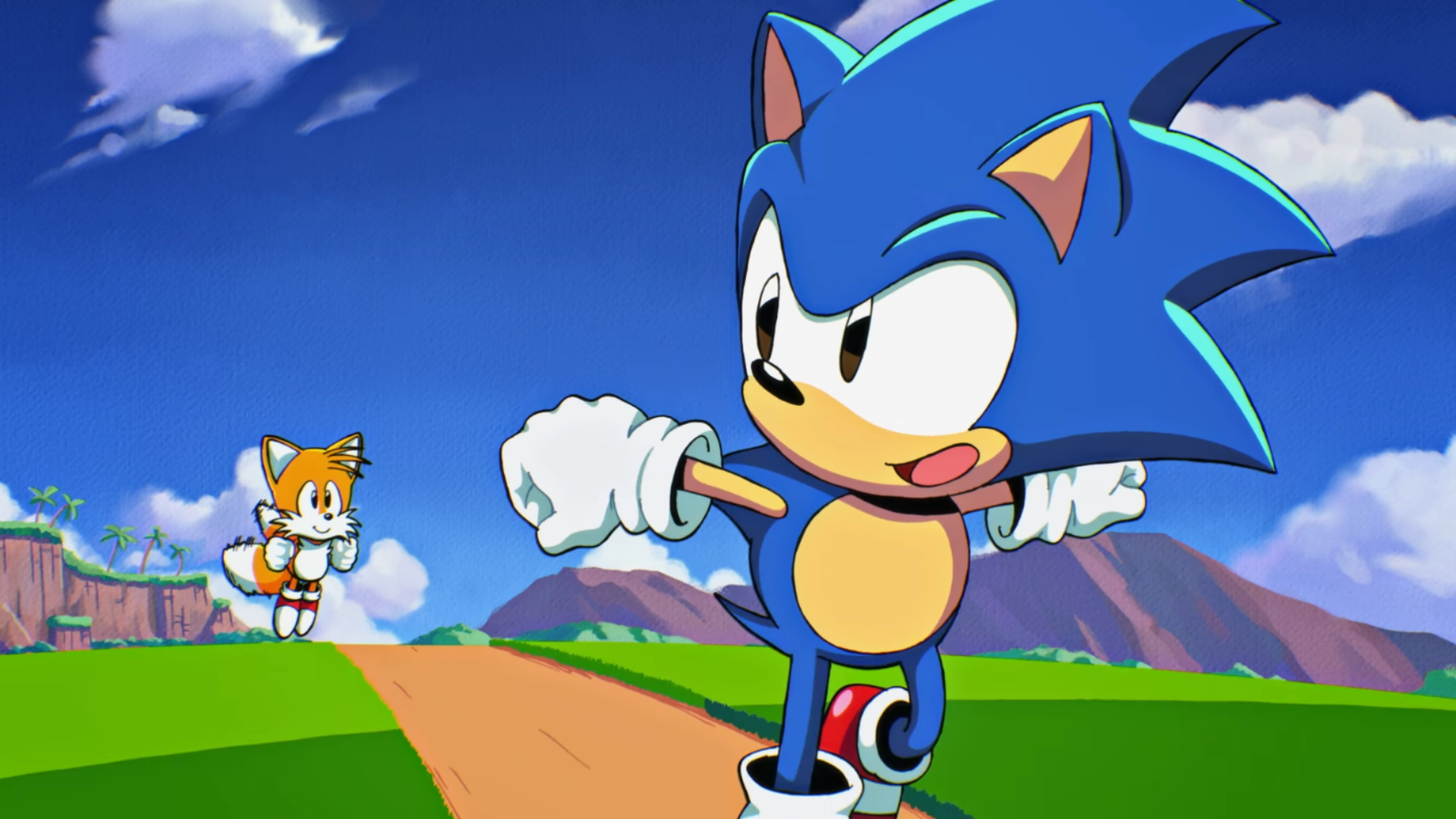
New to Origins is the story mode which links all the Sonic games in one narrative with animated cutscenes to mark one game to the next. Curiously enough, Sonic CD is the second game in the timeline despite coming out in late ‘93, Sonic 2 was out in late ‘92.
Fun Factor: Dash Through History.
Origins Plus has enough content, goals to keep you busy for a long time if you let it. As mentioned in Sound, on PC, find the mod that puts the published Sonic 3 music, and this is the definitive way to experience timeless classics in their original format, or deftly woven modern mode. There’s the dozen Game Gear titles, Sega’s full color handheld that drained batteries at speeds that would make Sonic say slow down. You can play each game with each character, play a boss rush mode, time attack and a mirror mode which has you going from right to left. This is peak 2D game and level design that has stood the test of time, with a modern presentation that adds on to it, not replace it entirely.